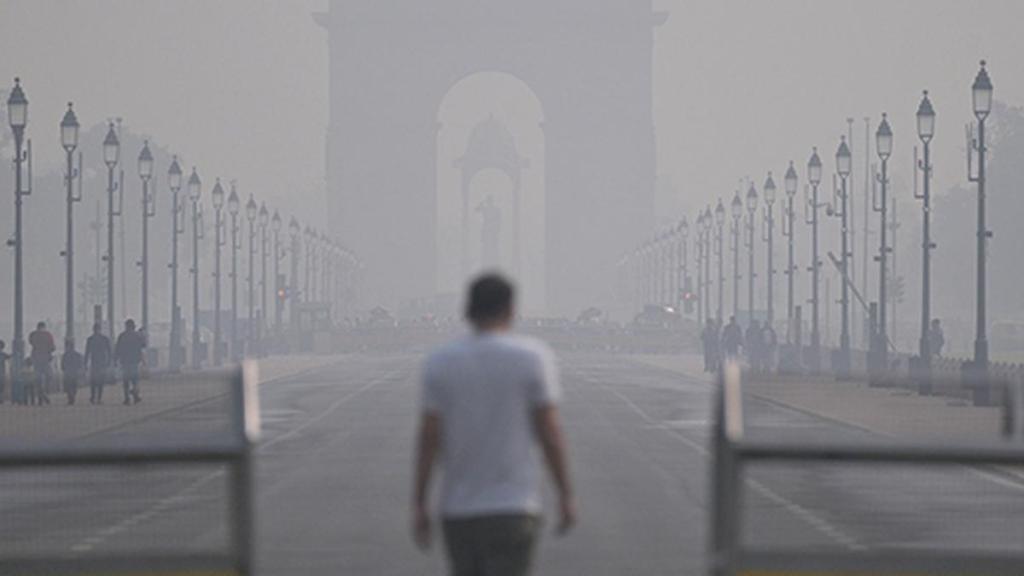
Sometimes an issue can have severe impact on us, yet we remain indifferent to it. It wasn’t until my brother bought an air purifier for our home that I realized how indifferent I had been to the problem of air pollution in our country.
Just a few days back, Delhi’s 24 hour average Air Quality Index (AQI) touched 494 and PM2.5 levels soared to 430µg/m³. This is nearly 30 times the WHO-prescribed limit for safe Human exposure. According to Berkeley Earth, inhaling air with PM2.5 load of 22µg/m³ for a day is equivalent to smoking one cigarette. By this yardstick, breathing Delhi’s air on its most polluted days has same effect on health as smoking 20 cigarettes per day!
Moreover, AQI readings may understate the severity of pollution. The index is capped at 500, meaning even if the actual AQI reaches 1,000, it is still shown as 500+. Furthermore, the labels on the CPCB AQI scale — such as ‘Poor’ (201-300), ‘Very Poor’ (301-400), and ‘Severe’ (401-500) — fail to convey the real health risks. More accurate descriptors like ‘Toxic,’ ‘Hazardous,’ and ‘Unbreathable’ are necessary to highlight the seriousness of the situation.
The problem of air pollution is not just confined to Delhi. While Delhi is the world’s most polluted capital, IQAir report reveals that 39 Indian cities figure in top 50 most polluted cities in the world. Further, State of Global Air 2021 highlights that air pollution is responsible for over 2.1 million premature deaths in India in 2021.
However, due to its intensity and visibility, Delhi often dominates the discourse on air pollution. The city’s air quality deteriorates due to various sources, including vehicular emissions, industrial discharge, coal-fired thermal plants, biomass burning, road dust, construction waste, and stubble burning in neighbouring states. Its geography exacerbates the problem during winters, as cold temperatures and high atmospheric pressure trap pollutants under an inversion layer. Additionally, northwestern winds carry pollutants from Punjab and Haryana into Delhi.

Given the urgency of the issue, numerous measures have already been taken. These include banning pet-coke as fuel in industries in NCR, shifting to CNG for public transport, incentives for adoption of EVs, coming up with graded response action plan (GRAP), setting up of Commission for Air Quality Management (CAQM), and launching national clean air program (NCAP) targeting over 100 non-attainment cities including Delhi that do not meet CPCB standards for air quality.
Perhaps, the most famous initiative is the odd even scheme, which comes into effect as part of GRAP if AQI exceeds 450. Yet, the Supreme Court recently observed that there is little scientific evidence of its impact on reducing pollution levels.
Despite these measures, there has been only modest success in tackling the problem. The primary reason for this is our reactive approach. For instance, GRAP kicks in once the AQI breaches certain threshold. This is akin to calling fire engine after the house has caught fire. Additionally, a CSE report highlighted inefficient utilization of NCAP funds, with 64% of the funds spent on road dust mitigation while only 0.6% went to tackle industrial pollution.
Coordination challenges between Delhi govt and neighbouring states hinder cooperation on curbing stubble burning. This also leads to shifting of responsibility and blame game. Further, continued reliance on coal-power, ineffective enforcement of emission standards for industries by CPCB due to limited capacity also contribute to persistence of challenge.
The seemingly intractable nature of the challenge makes it essential to examine how other countries have managed to overcome it — take the case of China. Many chinese cities like Beijing, Shanghai, Shenzhen, etc. were once pollution hotspots due to rapid urbanization. But, things have improved greatly over the last decade. The 2013 Beijing ‘airpocalypse’ episode which saw unbreathable air in Beijing for nearly two weeks was a turning point in the city’s fight for clean blue skies. The crisis brought awareness about the issue and turned air pollution into immediate priority item in political agenda.
China aggressively embraced clean mobility. According to some estimates, China accounts for 99% of electric public buses globally! Cities like Beijing rapidly expanded the network of metro connectivity. Further, Beijing adopted Lottery system to grant license plates to diesel/petrol vehicles making it tougher to register them. Low Emission Zones (LEZs) were created restricting movement of polluting vehicles with hefty fines. Further, polluting-coal fired plants were shut down and polluting industries were moved outside of the city. Dust pollution was tackled through massive afforestation efforts converting rooftops and open public areas into green spaces.
All these efforts have led to a drop in PM2.5 levels by 35% between 2013 & 2017 in Beijing, significantly improving air quality. It’s not just that, reducing air pollution improved life expectancy by 2.3 years! China’s experience shows the importance of strong political will in battle against bad air.
The way ahead
For Indian cities to overcome the pollution challenge, there is a need for a massive expansion of public transportation network with wider metro coverage, and a significant increase in the fleet of electric buses. Additionally, mandatory pollution checks, on-the-spot fines, and community policing — enabling people to capture pictures or videos of polluting vehicles — are necessary to ensure deterrence. All these measures have to be accompanied with lucrative incentives for EV adoption like zero GST, free public charging booths, separate lanes at traffic signals, reduced parking fee, etc.
To tackle industrial emissions, stringent enforcement of standards is required. There has to be immediate ban on thermal power plants until they install pollution-control technologies like FGD, electrostatic precipitators, etc.
For stopping biomass burning, entrepreneurship can be promoted in waste-to-wealth processing. For instance, while urban dairy farms struggle to meet cattle feed requirements due to exorbitant prices, thousands of tonnes of paddy straw is burnt annually. This points to supply chain gaps and opportunity for entrepreneurs.
Further, strong local bodies are needed to take ownership of the issue at local level. Beijing municipal authority came up with an action plan, mobilised funds and enforced clean air policies on its own. We need such empowered local bodies for our cities too.
The solution to India’s air pollution crisis does not lie in temporary fixes like cloud seeding or smog towers but in sustained, long-term efforts focused on sustainable mobility, clean energy, green infrastructure, and behavioral change. Clean air is not a luxury but a fundamental right. Indifference to this challenge harms not only our health but also future generations. Clean air must become a national and political priority.





 Welcome to my Weltanschauung!
Leave a comment